


Anthology Fest 2026: Grounded in culture, built for the future
Rodmill Lopez | Manila Bulletin
11 October 2026

The Anthology ASEAN Architecture Festival 2026 brings regional architects together to examine how design can preserve cultural identity, and shape more inclusive futures
A building's impact is measured not only by its design, but also by how it serves the people around it. From preserving cultural identity to rethinking public spaces and urban development, these questions took center stage at the Anthology ASEAN Architecture Festival 2026, held from Oct. 2 to 4 in Intramuros, Manila. Through talks and discussions, regional architects and thought leaders examined how care, culture, and collective responsibility can influence the places and communities of the future.
The festival opened on Friday, Oct. 2, with a ceremony attended by First Lady Louise Araneta-Marcos, Manila Mayor Francisco "Isko Moreno" Domagoso, and Intramuros Head Administrator Atty. Joan M. Padilla, alongside festival curator and principal architect of WTA Architecture and Design Studio William Ti Jr. Following the opening remarks, they signed the Shared Ground Declaration, formally setting the direction for the festival's discussions.

First Lady Louise Araneta-Marcos (second from left), Manila Mayor Francisco "Isko Moreno" Domagoso (right), Intramuros head administrator Atty. Joan M. Padilla, and WTA Architecture and Design Studio principal architect and festival curator William Ti Jr. mark the opening of the Anthology ASEAN Architecture Festival 2026 on Oct. 2 in Intramuros, Manila (Photo: Anthology Fest)
"Buildings only become architecture once they are shared," Ti said. "The idea is easy enough to say and hard to practice. Every building we design sits on ground that someone else also depends on. Architecture shapes our neighborhoods, our daily routines, even simple corridors or entrance canopies. The value of architecture shows up most clearly in those buildings where people meet, whether they plan to or not. Architecture, by its very nature, is shared ground."
This perspective informed the festival's first day, which focused on care and architecture's responsibility beyond a building's completion. Across four Intramuros venues, Anthology Talks, Shelter Dialogues, Living Anthology, Anthology Raw, and Ground Works brought together practitioners to consider how buildings and public spaces serve the people who use them. A keynote conversation between Pritzker Prize laureate Shigeru Ban of Shigeru Ban Architects and Ed Calma of Lor Calma and Partners was among the day's highlights.
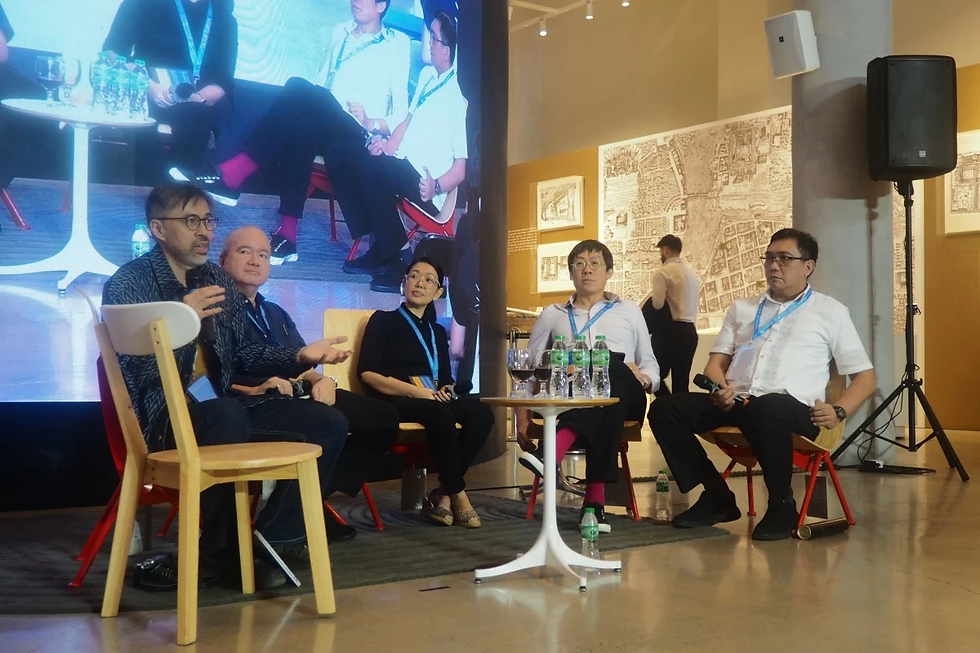
On Saturday, Oct. 3, the conversation shifted to culture, particularly how architecture can respond to changing societies without losing their histories and identities. In "Architecture and cultural translation," Sibarani Sofian, founder and director of Indonesian urban design and planning practice Urban+, presented his master plan for Nusantara, Indonesia's new capital city, alongside Arch. Barbie del Castillo-Go of Casas + Architects. His presentation explored how nature and cultural heritage can inform urban planning while making room for future generations
"Traditional culture has to be acknowledged, the current one must be lived in, but we also must think about the one transforming into the new future we want to build," Sofian said.

The question of what should be preserved also surfaced in Shelter Dialogues' "Memory without monument." Architect and researcher Eunice Seng and urban planner Dr. Nathaniel von Einsiedel, in a discussion moderated by Haziq Ariffin of ING Media, examined how redevelopment can displace communities and erase shared histories. They also considered adaptive reuse as a way to give historic buildings new functions while retaining their cultural value. Von Einsiedel pointed to places threatened by overdevelopment, where protecting the existing landscape may matter more than building anew.
The festival's final day turned to the future of the built environment, including the balance between private development and public needs. "Public good, private power," featuring Jessica Sy of SM Prime Holdings and David Leechiu of Leechiu PropertyConsultants, addressed this relationship, with Barbie del Castillo-Go as moderator. Other discussions considered the responsibilities of architects, the future of shared spaces, and what more equitable development could look like.

These questions brought together Dominic Galicia of Dominic Galicia Architects, Koon Wee of Skew Collaborative Singapore, Paulo Alcazaren of PGAA Creative Design, Andra Matin, and Angie Miranti of Studio Andramatin Indonesia. The program also featured Jose Franco Soberano of Cebu Landmasters Inc. and Mybelle Aragon-GoBio of Robinsons Land Corp in discussions on future development and social equity, moderated by Buck Sia of Zubu Design Associates.
Ole Scheeren of Büro Ole Scheeren and Leandro "Andy" Y. Locsin Jr. of Leandro V. Locsin Partners concluded the talks with perspectives on sustainable, interactive, and culturally grounded development. The Shared Ground Gala Dinner marked the festival's close, bringing its discussions back to the relationship between architecture and everyday life, and to the responsibility of shaping places that communities can share. Full article here.